
Our Work
Co-creating Spaces for Dignity, Resilience, and Integration
Our Work
Co-creating Spaces for Dignity, Resilience, and Integration
Architecture is more than the act of construction; it is the act of building hope and restoring dignity. At IAD, we believe that every project is a collective journey. We step beyond the role of conventional designers to act as spatial thinkers and learning partners for those who have been marginalized.
From the temporary shelters of displacement camps to the resilient homes of climate-affected rural villages, we are designing pathways from short-term relief to long-term belonging. We don’t just build for communities, we build alongside them, ensuring that every structure is a foundation for a more just and resilient future.
Architecture is more than the act of construction; it is the act of building hope and restoring dignity. At IAD, we believe that every project is a collective journey. We step beyond the role of conventional designers to act as spatial thinkers and learning partners for those who have been marginalized.
From the temporary shelters of displacement camps to the resilient homes of climate-affected rural villages, we are designing pathways from short-term relief to long-term belonging. We don’t just build for communities, we build alongside them, ensuring that every structure is a foundation for a more just and resilient future.
Current Projects
Building the future together. Here is a glimpse into the initiatives we are actively working on today.
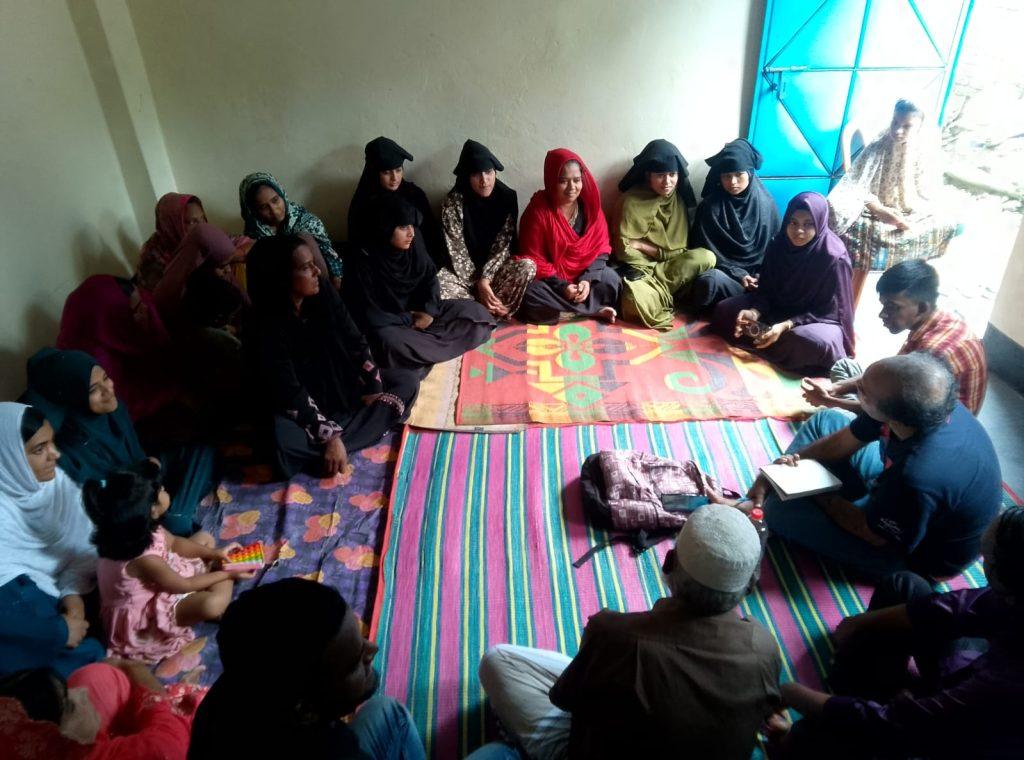
Community-led Development project of Urdu-Speaking Biharis
Location: Adamjee Camp, Narayanganj
Implemented by: Council of Minorities (COM) with support from World Habitat
Our Intervention:
After nearly 55 years of internal displacement, the residents of Bangladesh’s ‘Bihari Camps’ continues to face insecure and inhumane living conditions. With limited government support and, in some cases, hostile action, this project was co-founded in 2019 by architect Rabeya Rahman and implemented by Council of Minorities, funded by World Habitat to empower camp residents to address land tenure and housing challenges through collective, pragmatic action. Through this project, technical experts have been steering and empowering the camp residents to advocate for their rights to adequate housing, land tenure security, legal ownership and greater social integration in Bangladesh. The project was piloted in Geneva Camp in Mohammadpur, Plastic House Camp in Bogura, and AdamJee Camp in Narayanganj—three of the 116 Bihari Camps across the country.
The founder of IAD has been actively involved in the project from Phase I through Phase V, providing design, technical guidance, and strategic input. This year, the project is entering into the sixth phase where IAD will lead the settlement planning and design of the Adamjee camp, Narayanganj, ensuring that the master plan reflects both community needs and long-term resilience. The following activities will be undertaken during this phase:
- Land measurement of the entire 39-acre camp and Block-P to determine precise dimensions.
- House-hold survey and Mapping of Block-P.
- Development of a master plan for the camp settlement, designed by Integrated Architecture & Development (IAD).
- Community exhibition- to share designs and gather resident feedback.
Policy Advocacy meetings with the District commissioner office (DC), relevant ministries, local authorities, and the EPZ administration.
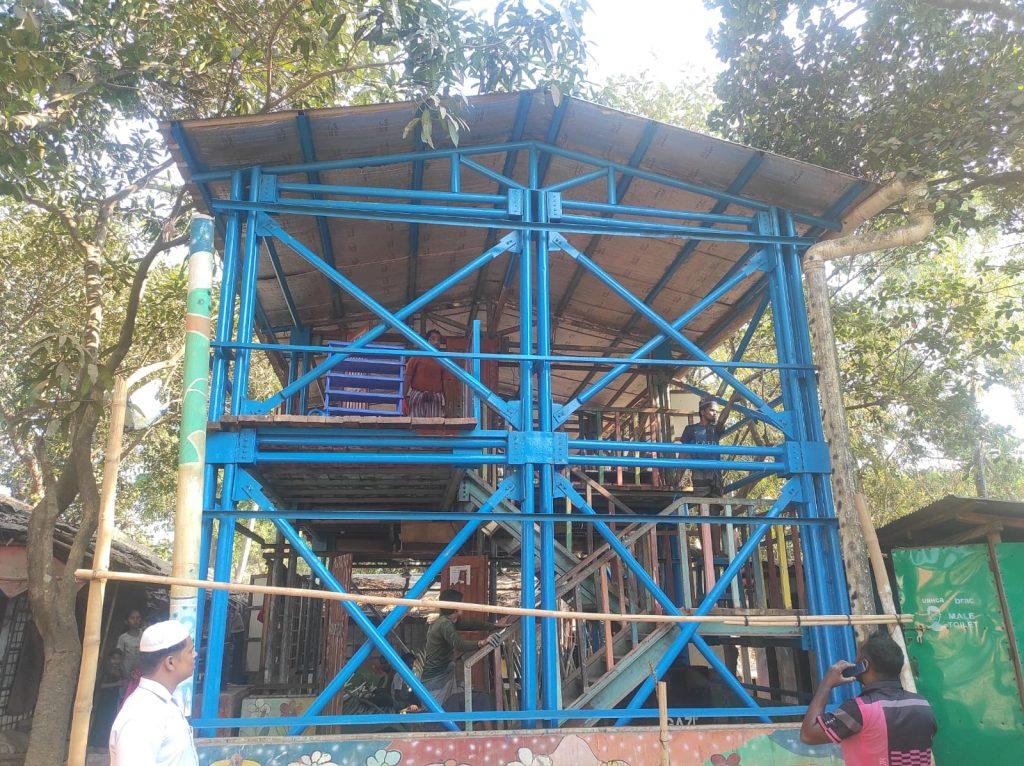
Renovation and Maintenance Work of Learning Centers in Rohingya Camps, Refugee Study Unit (RSU), Centre For Peace and justice (CPJ), Brac University
Location: Ukhia and Teknaf, Cox’s Bazar
Our Intervention:
In early 2025, the Centre for Peace and Justice (CPJ) at BRAC University, through its Refugee Study Unit (RSU) in Ukhia, Cox’s Bazar, completed extensive architect-supervised renovations of 15 learning centers, including both single-storied and double-storied structures. These centers, serving Rohingya adolescents and youth through the LIT (Language, Images, and Analytical Thinking) program, had worn down from years of use and environmental exposure. The upgrades included structural and roof repairs, fence restoration, painting, branding, and enhanced hygiene and safety measures—making the spaces more resilient during the monsoon and more welcoming for learners. Creative murals added to select centers bring color and energy to the classrooms. Over the past year, these revitalized centers have provided safe, resilient, and inspiring spaces for education and personal growth, highlighting CPJ’s ongoing commitment to empowering Rohingya youth and strengthening its presence and impact in the community.
Project Archives
Our past interventions are our stepping stones. Browse our completed projects and research by category.
Let's Transform Communities Together
We believe that the people who live in a space should be the heartbeat of its creation. But we cannot bridge the gap between crisis and dignity alone.
Whether you are a donor seeking to invest in lasting impact, an NGO looking for a technical partner, or an academic researcher co-producing knowledge for a better world, your partnership is the key. Together, we can build more than just structures; we can build a more just, resilient, and inclusive future for everyone.